What Is Temperature Rise in a Tankless Water Heater?
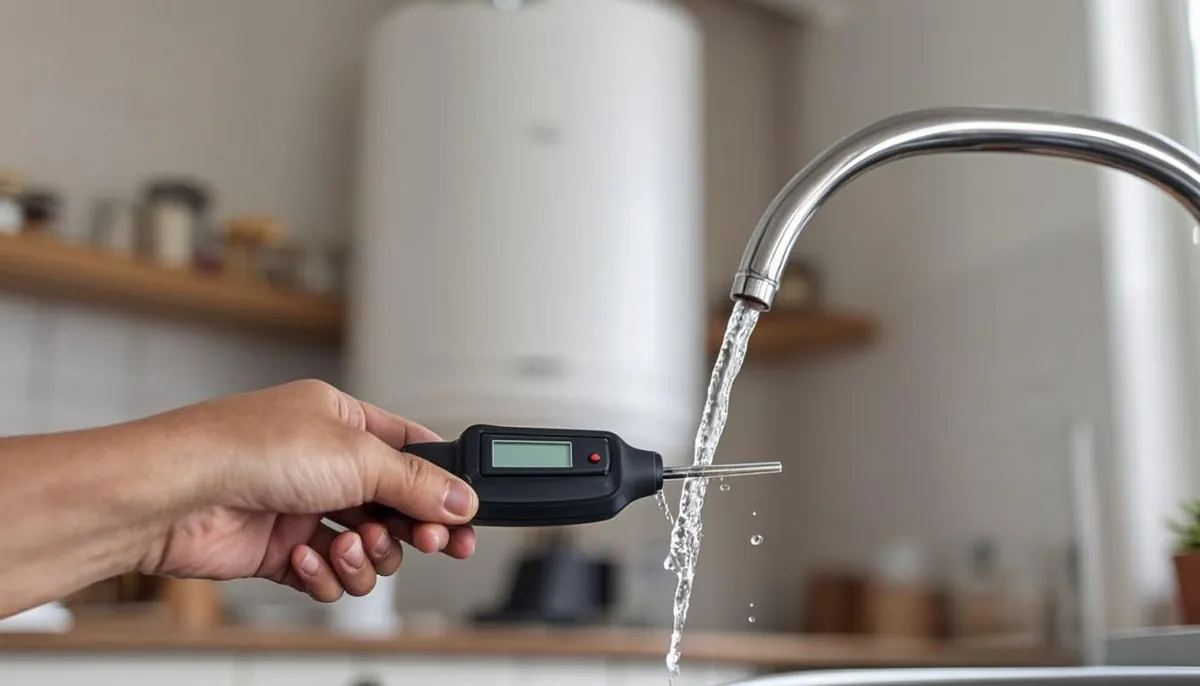
Temperature rise is the number that decides what a tankless water heater actually delivers at your house, and it is the number the box never leads with. Two homes can install the identical model and see different flow from the same showerhead, because the rise each home asks for is different. This guide defines the term in plain language, shows how inlet water temperature moves it through the year, works the arithmetic, and walks through reading a performance chart the way our installers do before quoting a tankless job in Odenton.
What Does Temperature Rise Mean?
Temperature rise is the gap between the water entering the unit and the water you want leaving it. A tankless heater has no stored reserve to lean on; every gallon is heated in a single pass through the heat exchanger, so the machine's whole job is to close that gap instantaneously. The set side of the gap is whatever the household expects at the tap, and 120 degrees is where most homes run their delivery. The inlet side is whatever the water main supplies that day. Set temperature minus inlet temperature equals the rise, and the rise is what consumes the unit's heating capacity.
How Cold Water Inlet Temperature Affects Output
Inlet temperature is the moving part of the equation. Water mains draw from sources that track the seasons, shallow service lines pick up ground temperatures, and the result is an inlet that swings meaningfully between an August afternoon and a February morning in Maryland. The unit does not change between those dates; the water does. Colder water entering the exchanger must climb further to reach the same outlet, and the heater pays for every extra degree in flow. That is why a tankless unit that felt limitless in September can feel ordinary in January without a single part failing: the rise grew and the rated capacity did not. A thermometer under the cold tap gives any homeowner the inlet half of the equation in seconds, and it is the same measurement our estimators record during the site visit rather than assume.
Calculating Required Temperature Rise
The arithmetic takes two numbers and one subtraction. Start from the outlet temperature the household expects, then subtract the coldest inlet temperature the home realistically sees, not the annual average. A home set to 120 degrees with inlet water in the low forties on a winter morning is asking for a rise in the high seventies, while the same home in late summer asks for far less. Sizing against an average is how units end up winter-limited; our method uses the coldest realistic morning of the year, so equipment chosen in spring does not disappoint the following January.
Understanding Manufacturer GPM Performance Charts
Manufacturers publish performance charts that pair the two variables: find the row for your temperature rise and read across to the flow the unit sustains there. The chart exists because the rating is conditional. Under the federal ENERGY STAR test method behind certified product listings, a tankless unit's maximum gallons-per-minute figure is measured over a 67 degree temperature rise, and the certified listings state that basis outright. The chart then extends the picture to the other rises, including the bigger rises cold-climate winters demand. Reading your own row, rather than the headline number, is the entire skill. The charts live in the manufacturer's spec sheet and installation manual for each model, so the lookup happens against the specific unit under consideration, never a category average.
Why Maximum GPM Ratings Can Be Misleading
The maximum GPM on an advertisement, a listing, or the box is a laboratory number tied to that 67 degree test rise. Ask the unit for more rise than the test used and it delivers less than its maximum; ask for that flow while other fixtures run and the two demands press on capacity at once. Scale narrows the exchanger's passages as the years pass, trimming real-world output below even the chart. None of this makes the rating dishonest; it makes the rating a starting point. Shopping by the biggest number alone is the most common sizing error we meet when diagnosing underperforming units, and it is avoidable with one chart lookup.
Choosing a Tankless Unit for Peak Demand
A unit earns its place on the wall by clearing three checks at once: the household's worst simultaneous flow, delivered at the coldest realistic rise, with margin held back for the scale years. Our tankless sizing guide covers the demand side of that arithmetic fixture by fixture. The rise side is this page's subtraction plus the performance chart, and the estimate visit closes both with a measured inlet temperature and full gas and panel verification, so the equipment quoted is rated for your February, not the test lab's.
What temperature rise do I need for a tankless water heater?
Subtract your coldest realistic inlet temperature from the outlet temperature you expect at the tap. A household delivering 120 degrees with winter inlet in the low forties needs a rise near eighty degrees, and that winter figure, not the milder seasons, is the one to size against. The estimate visit measures the actual inlet rather than assuming it.
Why is my tankless water heater's GPM lower than the rated number?
The rating is measured over a 67 degree temperature rise under the federal test method, so a home asking for a larger rise receives less flow than the maximum. Winter inlet, hard-water scale, and simultaneous demand each trim output further. A unit that has lost output over the years rather than each winter points at scale, which a descale addresses.
What does a 67 degree rise mean on a tankless water heater listing?
It is the test condition behind the maximum GPM figure on certified product listings: the unit's flow was measured while raising water 67 degrees and holding that rise. Treat the number as the flow available at that rise, then read the manufacturer's chart for the rise your home actually asks for.
Do I need a bigger tankless unit for Maryland winters?
You need a unit rated for the rise your winter delivers. Because inlet water arrives much colder, the correct comparison is the performance chart at your winter rise against your simultaneous demand. Where one unit cannot clear both, the options include a higher-capacity model, a second point-of-use unit, or a hybrid tank, and the estimate prices each path honestly.