Why Does My Tankless Water Heater Keep Shutting Off?
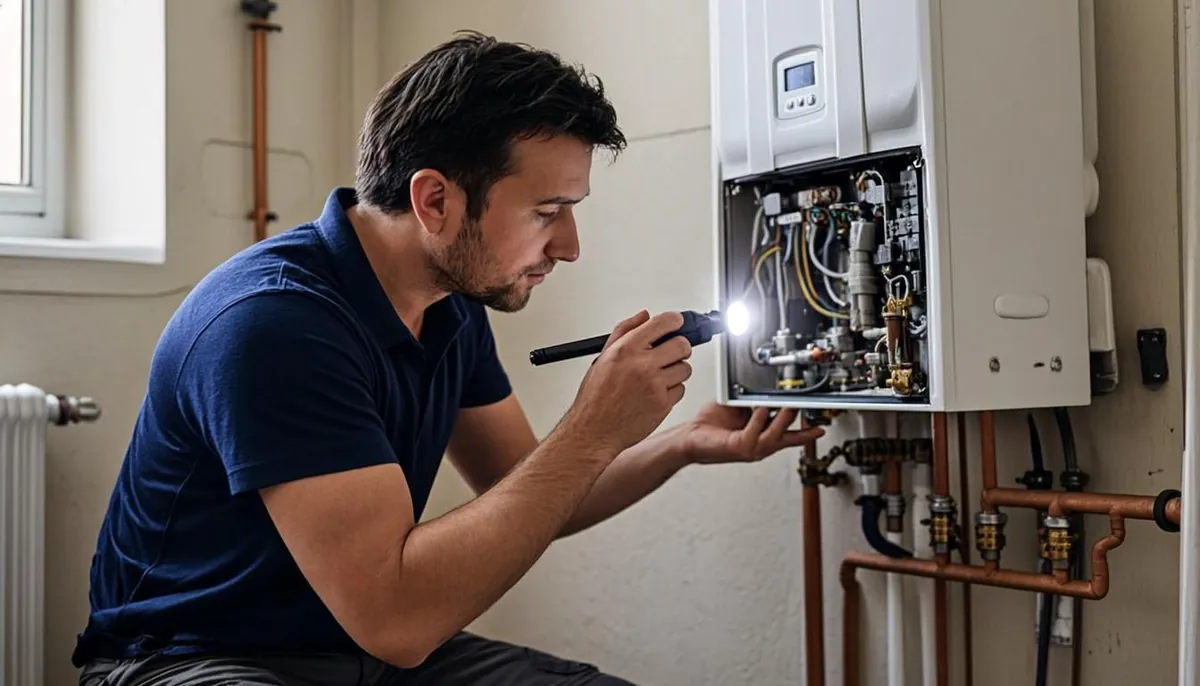
A tankless water heater that fires, runs for a few minutes, and then quits mid-shower is not the same complaint as a unit that never heats at all, and the difference matters. Intermittent shutdowns follow their own diagnostic path, because ignition clearly works, which clears the igniter as the prime suspect and points instead at whatever changes while hot water is running. This guide covers the shutdown causes our technicians trace on Odenton service calls, why each one stops a running unit, and how a repeated-shutdown diagnosis actually proceeds.
Common Causes of Unexpected Shutdowns
Running units shut down for a short list of reasons: flow fell below the activation floor, the gas supply could not sustain the burner, a safety limit tripped on heat or exhaust, or a sensor reported a condition the control board refuses to ride through. The timing of the failure is the best clue a homeowner can collect. A unit that quits at nearly the same point every shower is describing a flow or capacity limit; one that quits at random points is describing supply, sensing, or venting. Note the minute marks and any display code before the next restart, because that history steers the whole visit.
Insufficient Water Flow
A tankless unit fires only when flow through the sensor clears an activation threshold, and it keeps firing only while flow stays above that floor. A draw that starts strong and then fades, an inlet filter screen collecting debris, a throttled shutoff valve, or soft pressure in the building's supply can all let flow sag mid-session, and the board shuts the burner down in response. The signature is distinctive: the shower starts hot, weakens, and the unit goes quiet, and opening a second tap sometimes wakes the burner again because combined flow cleared the threshold. Cleaning the inlet screen and restoring full supply flow resolves the most common versions of this failure.
Gas Supply and Ignition Problems
A tankless burner draws hard while it runs, and a gas supply that can start the unit can still fail to feed it: pressure dips when another gas appliance kicks on elsewhere in the house, an undersized line starves the burner as it ramps, or a shared meter and regulator serve several appliances imperfectly. The burner drops out, the unit may refire seconds later once conditions recover, and the whole episode reads to the homeowner as random shutoffs. Flame-sensing faults produce a similar pattern from the other direction: the flame is present, but the sensing rod reports it unreliably, and the board shuts down rather than release gas without verified combustion.
Overheating Protection
Every tankless unit carries a high-limit control that stops the burner when the heat exchanger runs too hot, and repeated trips are among the most common shutdown patterns we diagnose. The usual sequence behind them is restricted heat transfer: scale plated inside the exchanger's narrow passages slows the water crossing its hottest zones, the metal overheats, the limit trips, and the unit locks out until it cools. Homeowners often notice the next shower runs fine, because a cooled exchanger fires normally and then repeats the cycle. Left alone the trips arrive sooner each week; a professional descale removes the insulating layer causing the overheat, and a maintenance schedule keeps it from rebuilding.
Venting and Exhaust Restrictions
Gas tankless units verify that exhaust is actually leaving the building, and a restriction anywhere in that path ends the heating cycle for safety's sake. Bird nests, leaves, a deteriorating termination, snow drifted against a sidewall cap in winter, or a sagging or crushed stretch of vent pipe all raise back-pressure until an exhaust limit stops the burner. Power-vent and condensing models add a blower to the chain, so a failing fan motor or a blocked condensate path produces the same protective shutdown. Restrictions also carry the quiet danger in this list, because a venting fault that has not yet tripped the limit can still be spilling exhaust where it does not belong, which is why any shutdown pattern that survives the simple checks earns a vent inspection the same day.
Faulty Sensors and Electrical Problems
Modern units watch themselves through a row of sensors, and any one of them drifting can end an otherwise healthy cycle. Flow sensors age and misreport, outlet thermistors read high and trip limits early, and flame rods foul until combustion verification drops out mid-run. Condensing units add a condensate overflow switch that halts the burner when the drain backs up. On the electrical side, loose connections, a weak ground, or a control board failing intermittently can cut a running unit with no pattern at all. Sensor and board faults are board-reported, meter-checked work, and they are the category most often misdiagnosed by parts-swapping without the code table.
How a Technician Diagnoses Repeated Shutdowns
The diagnosis starts with the story the unit already told: the error-code history, the minute marks of each shutdown, and whether the failures track the season or the hour. Then the measurements reproduce the complaint. The technician runs fixtures to verify flow at the activation threshold, checks gas pressure at the unit while it fires and while other appliances run, inspects the heat exchanger for scale, walks the venting path end to end, and tests the sensors against their expected readings. The visit ends with a named cause and a flat quote to correct it, whether that is a descale, a filter and screen service, a gas supply fix, a sensor replacement, or a vent repair, and our tankless repair service carries the parts to finish most of those in one visit.
Why does my tankless water heater shut off after a few minutes of showering?
The two most common causes are flow fading below the unit's activation threshold and a high-limit trip from an overheating heat exchanger, usually scale-related. The timing helps separate them: shutdowns at roughly the same point each shower suggest a flow or capacity limit, while shutdowns that vary point to supply, sensing, or venting. A diagnostic reads the error history and reproduces the failure to name the cause.
What makes a tankless water heater turn off when another fixture opens?
Competing draws split the flow between fixtures, and when the unit's branch falls below its activation threshold the board shuts the burner down even though water is still running. The pattern points to a demand that outruns the unit's sizing or a flow sensor tripping early, and both are verified with a fixture test before any parts are quoted.
Can a dirty filter cause a tankless water heater to shut off mid-use?
Yes. The inlet filter screen sits ahead of the flow sensor, and debris loading it reduces flow through the unit until the sensor sees less than the activation minimum, which stops the burner mid-session. Cleaning the screen is routine service, and repeat clogs usually indicate upstream sediment or scale that a full descale should address.
Is it normal for the unit to restart after I close and reopen the tap?
Closing and reopening the tap changes the flow signal the sensor reports, which can re-clear the activation threshold or end a brief lockout, so the unit refires. The restart actually confirms the ignition hardware works and points the diagnosis at whatever interrupted it: flow, gas supply, or a protective limit. Repeated manual restarts are a symptom worth reporting, not a fix.