Water Heater Repair vs. Replacement: Which Is the Better Choice?
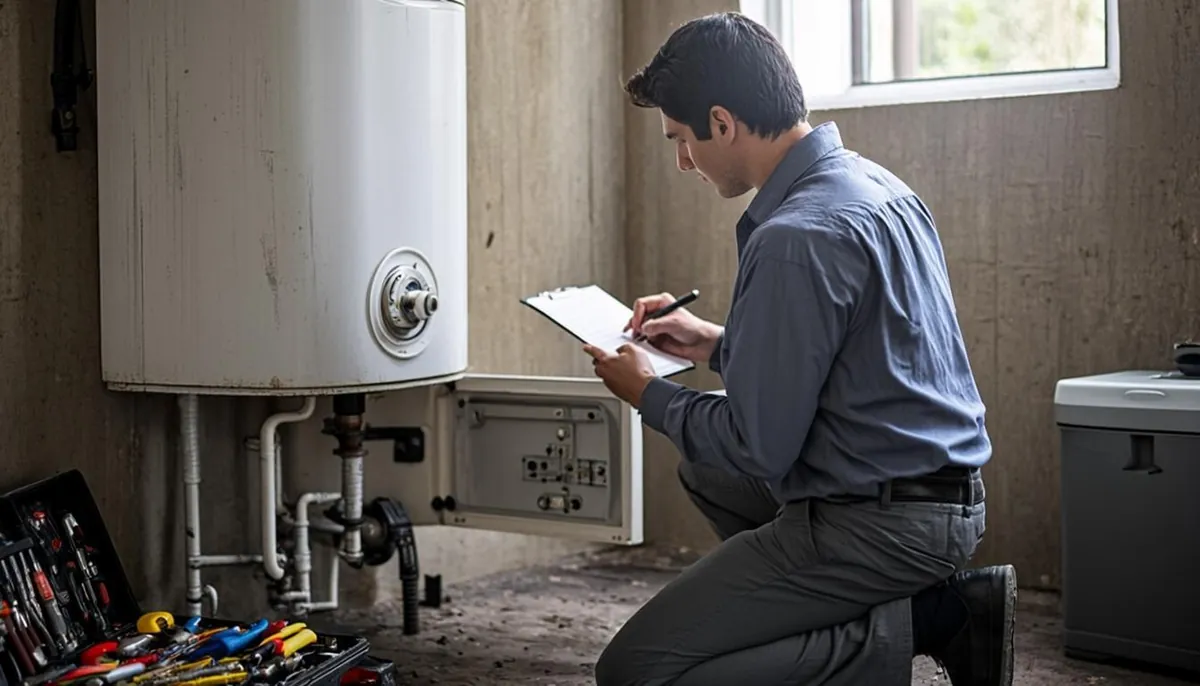
Every water heater owner meets this decision eventually, usually on a cold morning. The honest answer is that neither option wins by default: a healthy eight-year-old tank with a failed thermostat is a repair, and a weeping twelve-year-old shell is a replacement, and most situations in between are decided by a handful of factors you can check yourself. This guide lays out the framework our technicians apply on estimates, so you can predict which side of the line your own situation falls on before anyone quotes you.
When Water Heater Repair Makes Sense
Repair wins when three conditions hold at once. The tank shell is dry and sound, with no water at the base and no rust weeping from seams. The failure is in a replaceable component: thermostat, heating element, thermocouple, ignition assembly, relief valve, or drain valve. And the tank still has meaningful years ahead of it, which for our records means roughly under its first decade. Component repairs on young tanks are routine single-visit work, and the parts ride on our trucks precisely because most of them end the problem the same day.
When Water Heater Replacement Is More Practical
Replacement wins when the failure lives in the shell, because no repair puts metal back on a corroding tank. It also wins when age has stacked the odds: a unit past its early teens converts every component failure into a conversation about the next one. A third trigger is capacity or technology change, when the household has outgrown the tank or wants to move to a different equipment type entirely. None of these require the old unit to be dead; they require it to be a poor platform for the next few years of hot water.
Repair Cost vs. Replacement Investment
The money comparison has to run in the same units: total cost to restore reliable hot water, not invoice to invoice. Component repairs usually land well under a quarter of a like-for-like replacement here in the Odenton area, which is why sensible repairs on healthy tanks are just sensible. But repair pricing recurs where replacement pricing is once: a tank that needed a thermostat last winter and an element this winter is writing a payment plan for its own successor. Our local replacement cost guide publishes the actual installed ranges we quote, so the two sides of the comparison use real local numbers instead of national averages that do not apply to this corridor.
Timing changes both sides of the ledger too. A repair scheduled on a Tuesday visit costs what the quote says; the same repair forced out at midnight during a failed tank's flood carries emergency response pricing, and so does the replacement that follows it. Homeowners who budget ahead can also weigh equipment financing and seasonal scheduling against the alternative of paying for the next failure rather than preventing it. None of this appears on an invoice line, and all of it belongs in the decision.
Age, Condition and Parts Availability
Age and condition interact. A ten-year-old tank with a pristine shell and a flushing history may deserve its second component; a seven-year-old tank that was never flushed and shows crust at the fittings may not. Parts availability narrows with age too: control valves and elements for common brands stay stocked for years, but proprietary assemblies on discontinued models can turn a simple fix into a special order, and a special order is a week of cold showers with money still owed.
Tank Leak vs. Component Failure
This distinction decides more cases than any other, so it deserves its own explanation. Fittings, valves, elements, thermostats, and drain hardware are all bolted or threaded into openings in the shell, and all of them are repairable. The shell itself is a welded, glass-lined vessel; once it weeps from corrosion, nothing re-seals it permanently. Water from a fitting drips at the connection point and stops when things are tightened. Water from the shell rises from underneath the tank or seeps from a seam regardless of fittings. Where the water appears, and whether it stops and starts, tells a technician which failure they are looking at, and our leak guide walks through that identification step by step.
Comparing Long-Term Ownership Costs
The replacement side of the ledger pays you back in ways an aging tank cannot: full efficiency instead of a sediment tax, a fresh warranty, parts that are in production, and a decade without decision fatigue. Efficiency matters more here than most homeowners expect, because water heating is a leading share of a typical home's energy bill, and a tank that has lost its lining and grown a sediment blanket pays that bill at a handicap every month. An efficient new unit can save hundreds of dollars a year against a worn one, per Department of Energy guidance, which means the effective cost gap between old tank and new is smaller than the quote gap suggests.
Decision Checklist for Homeowners
- Find the manufacture date from the serial number; age sets the whole frame.
- Look at the base: dry shell favors repair, any weeping or crust favors replacement.
- Check the water color at the hot tap; rust points at the lining, not the pipes.
- Add up the recent repair history; the second component failure in two years is a pattern, not a streak.
- Compare the repair quote against our published replacement ranges, not against zero.
- Ask what else the inspection turned up; a quote written from one symptom is incomplete.
Work the list top to bottom and the answer is usually obvious by the fifth line. When it is not, we quote both paths on the same visit, with the same flat pricing, and leave the decision with you. That is exactly how our water heater replacement service and our repair service are set up to work: one visit, both numbers, no pressure toward either.
Is it worth repairing a water heater that is 10 years old?
It depends on the shell and the history more than the number. A dry tank with a flushing record and a first component failure is often worth fixing; the same age with rust in the water, crust at the base, or a prior repair is usually better replaced. We inspect before quoting so the decision uses the tank in front of us, not just its birthday.
What is the 50 percent rule for water heater repair?
It is the general home-repair guideline that repair stops making sense once a fix costs half of replacement. Applied to water heaters it lands close to our own experience, with one refinement: on a young, healthy tank even a mid-priced repair beats replacement, while on a late-life tank even a cheap repair rarely buys enough time to justify it.
How do I know if my water heater tank is leaking or just a fitting?
Location and behavior. A fitting leak drips at a visible connection and often stops after the joint is tightened; a shell leak rises from under the tank or seeps from a seam and ignores the fittings entirely. Wiping the area dry and checking again an hour later makes the answer obvious before the technician arrives.
Should I replace my water heater before it fails?
If it is inside its final years and showing any aging signs, yes, and the reasons are practical rather than fearful: planned replacement lets you choose equipment and timing, avoids the water damage an unattended failure causes, and prices out lower than an emergency call. Our replacement page covers the planning process from sizing to permit.