What Is a Water Heater Anode Rod and When Should It Be Replaced?
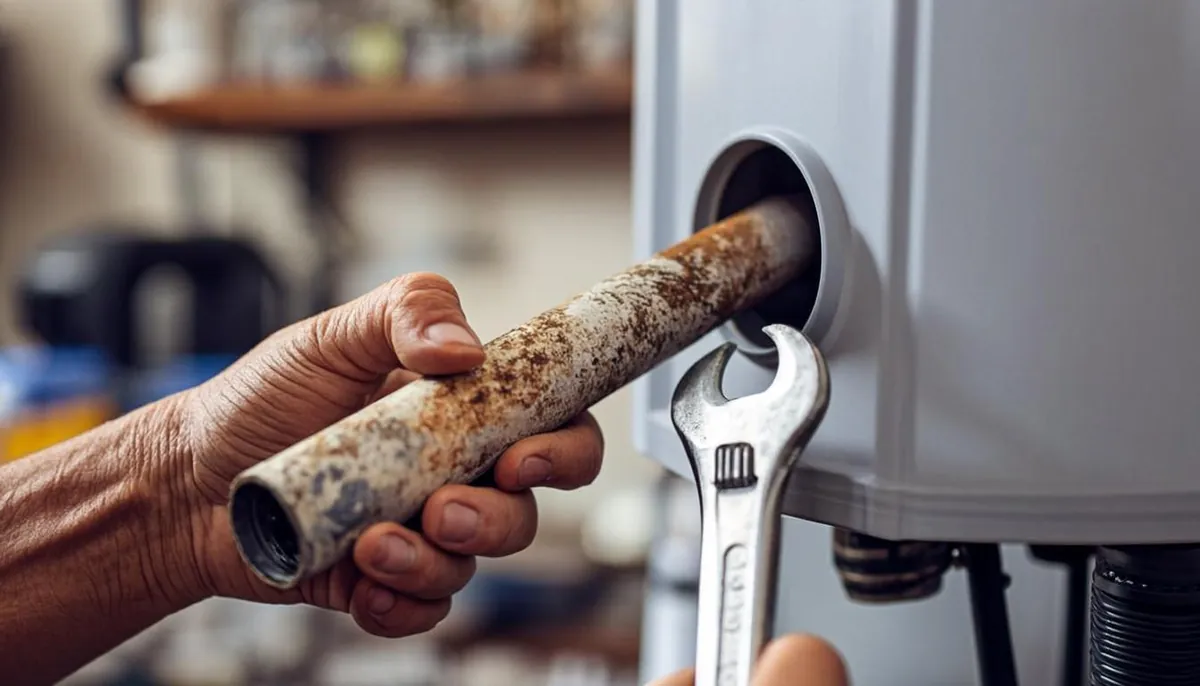
Ask a room full of homeowners what keeps a water heater tank from rusting through and most answers land on the glass lining, the coating inside the steel shell. The lining is real, but it is incomplete: every coating leaves microscopic openings, and water is patient. The component that actually stands between those openings and a rusted-out tank is the anode rod, a length of sacrificial metal suspended inside the tank that corrodes on purpose so the tank does not have to. It is the least famous part on the equipment, it is a large share of the reason some tanks last twenty years while identical units die at eight, and it is the first thing we check when a homeowner asks how many years their heater has left.
What Is an Anode Rod?
An anode rod is a metal rod, typically three to four feet long, hung from the top of the tank and immersed in the water for its whole working life. The core is steel wire, and the sacrificial metal around it is usually magnesium, aluminum, or a zinc-bearing alloy, chosen for one property: it gives up ions more readily than the steel of the tank does. The rod screws into a port at the top of the tank, sometimes on its own, sometimes combined with the hot water outlet nipple, and it costs a small fraction of what the tank around it costs. That ratio, a cheap part defending an expensive one, is the entire logic of the design.
How Sacrificial Anode Rods Protect Water Heater Tanks
The protection runs on basic electrochemistry. Wherever two different metals sit in the same water, corrosion concentrates on the one more willing to give up ions, and the other is spared. The glass lining handles most of the tank wall, but at every gap, every pit, every spot the coating missed, water touches steel. With a healthy anode in the tank, the corrosion current those exposed spots generate flows to the rod instead, and the rod corrodes, steadily, by design. When the rod is finally consumed, the same current finds the next most willing metal in the circuit, which is the tank itself, and the clock that was supposed to run on the rod starts running on the shell. Every tank that seemed to fail suddenly was usually an anode that finished its work years earlier and nobody knew.
Common Types of Anode Rods
Three sacrificial chemistries cover most homes. Magnesium rods sacrifice fastest and protect most aggressively, the standard choice in moderately hard municipal water. Aluminum rods, often sold in flexible segmented versions for tanks with low overhead clearance such as closets and attic platforms, corrode more slowly and suit harder water. Zinc-bearing rods exist mainly for one specific complaint: the sulfur or rotten-egg odor that bacteria produce in some supplies, where a zinc alloy changes the chemistry those bacteria rely on. Separately from all three, powered anodes use a small external current to protect the tank without sacrificing anything, an option for problem-water homes that we quote when conventional chemistry keeps losing. The right rod is a water-chemistry decision before it is a hardware decision, which is why we ask what the hot water tastes and smells like before we quote the part.
Signs an Anode Rod May Need Replacement
- A sulfur or rotten-egg smell that appears in hot water only, strongest at showers and laundry sinks.
- Rusty or metallic-tasting hot water against cold taps that run clean.
- A tank reaching the middle of its warranty period with no rod ever inspected or replaced.
- Popping and rumbling arriving in a tank that used to run quiet, since sediment and anode decline travel together.
- Direct inspection showing the rod pitted along its length, reduced to roughly half its original diameter, or with the steel core wire exposed.
None of these is subtle once you know the list, but all of them are easy to miss in a busy household. The odor sign deserves one caution: it is also the symptom homeowners most often try to solve by turning the thermostat up, which costs efficiency and adds scald risk while leaving the rod untouched.
How Water Chemistry Affects Anode Rod Life
The same rod can last a decade in one house and three years in the next one over, and the water explains the difference. Hard, mineral-heavy water tends to coat the rod in scale that slows its sacrifice, while soft and softened water, being more conductive and aggressive, consumes anodes noticeably faster, a detail that surprises owners of whole-home softeners. Wells bring their own chemistry, and supplies with certain sulfate combinations drive both odor and faster consumption. There is no universal number that survives contact with this variability, which is why our maintenance visits inspect the rod rather than guessing from the calendar, and why the inspection interval, annually once a tank is a few years into its life in this region, matters more than any published lifespan chart.
Anode Rod Inspection and Replacement
The job is mechanical but rarely easy, which is the honest summary. Power or gas is shut off, the cold supply is closed, and pressure is relieved at a hot tap; the rod's hex head at the top of the tank is then broken loose, and on older tanks where that fitting has spent a decade heating and cooling, breaking it loose is most of the labor. The rod comes out, its condition is read, and a replacement of the correct chemistry and thread goes back with fresh sealant before the system refills and returns to service. Low-clearance installations get the flexible segmented rod, and tanks where the anode shares its port with the hot outlet get the combination nipple assembly. Our water heater maintenance service bundles the inspection with the flush and the safety checks precisely because the rod pull is the one item on the list that regularly surprises DIY homeowners with a stripped head and a second trip to the hardware store.
How often should an anode rod be replaced?
The inspection decides, not the calendar. We inspect annually once a tank is a few years into its life, and replacement follows when the rod is heavily pitted, roughly half consumed, or showing core wire. In this region's water that lands many households on a replacement every few years, with softened-water homes running faster.
Can a water heater run without an anode rod?
Mechanically nothing stops it, which is exactly the danger: a tank with a fully consumed rod runs normally while the corrosion current quietly transfers to the shell. The failure shows up years later as a leak no repair addresses. A missing or exhausted rod is not a neutral condition; it is the early chapter of the tank's last one.
Why does my hot water smell like rotten eggs?
That odor usually means sulfate-reducing bacteria reacting with a magnesium anode, and it concentrates in hot water because the tank is where they live. The standard response is a zinc-bearing anode plus a flush of the tank, and persistent cases get a closer look at the water source itself. Raising the temperature is the one response that makes things worse rather than better.
Is anode replacement worth it on an older tank?
It depends on what the inspection finds, and the inspection comes first for exactly this reason. On a tank past its second decade with rust-tinted water or base corrosion, the money belongs toward replacement, because the shell may already be engaged. On a healthy tank of six to eight years, a rod swap is the cheapest lifespan extension available anywhere on the equipment.