Gas Water Heater Venting: Types, Requirements and Common Problems
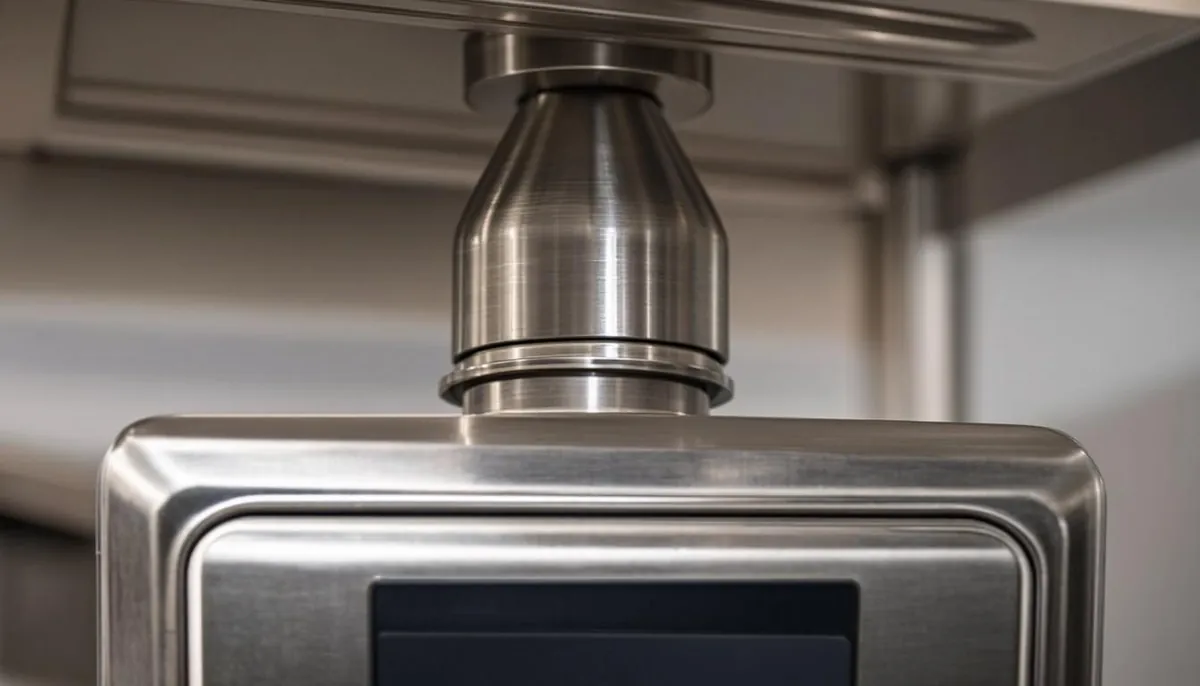
A gas water heater burns fuel in your utility space, and everything that burning produces except heat has to leave the house through the vent. That makes venting the load-bearing safety system of a gas heater rather than an accessory pipe: sized wrong, pitched wrong, or blocked, it stops doing the one job nobody sees until something goes wrong. This guide covers the three venting types installed around Odenton, what each demands from the house, the failure patterns we find on service calls, and the warning signs that should move a homeowner from reading to dialing.
Why Gas Water Heaters Need Proper Venting
Combustion turns natural gas into heat, water vapor, carbon dioxide, and carbon monoxide, and the vent's job is to carry everything after the heat out of the home while the burner runs. Draft, the steady pull that moves those gases up the flue, depends on the vent being sized, sloped, sealed, and clear. When venting works, nobody thinks about it; when it fails, exhaust spills back into the utility space instead of leaving it, and carbon monoxide gives no warning a homeowner can sense. Venting condition is therefore a safety inspection on every gas service visit, not a cosmetic one, and it is a code-governed part of any permitted installation in Anne Arundel County.
Atmospheric Vent Water Heaters
The atmospheric vent is the classic: a metal draft hood on top of the tank, a flue rising to the chimney or a metal stack, and no moving parts. Hot exhaust rises on its own, indoor air feeds the burner, and the system costs the least to install and maintain. The requirements concentrate in geometry, the flue must run with proper pitch and support, the draft hood must sit undisturbed, and combustible clearances around the flue must hold for decades, because the system has no fan to compensate for a sag, a short run, or a flue that has shifted. Atmospheric venting rewards houses with a healthy vertical flue nearby and punishes layouts that force long or flat runs.
Direct Vent Water Heaters
A direct vent unit seals the combustion system off from the room entirely: the heater draws its combustion air from outdoors through one sealed passage and exhausts through another, often as concentric pipe through a sidewall or roof. Nothing in the room feeds the burner, so the house's air envelope stays untouched, and the approach solves the tight-space problem where a utility closet cannot supply safe combustion air. The requirements shift to the sealed system itself: correct pipe lengths and terminations per the manufacturer, gasketed joints that stay sealed, and terminations placed where exhaust cannot re-enter the home or a neighboring window.
Power Vent Water Heaters
A power vent unit adds an induced-draft fan that pushes exhaust through the vent on its own schedule, which frees the heater from the chimney: runs can go horizontal, travel farther, and terminate at a sidewall, opening placements no atmospheric unit could use. The trade is electrical and mechanical: the unit needs power at the installation location, the fan adds a component with its own service life, and the venting material and routing follow the manufacturer's spec rather than the chimney's convenience. Power venting is the practical answer for finished basements and homes where a new vertical flue would be a construction project; it is also the type whose install-day details, slope, support, termination clearance, reward a careful installer most.
Common Venting Problems
- Backdrafting: exhaust spilling at the draft hood instead of rising, often from a blocked or competing flue.
- Corrosion and rust streaks on the flue, hood, or tank top from chronic spillage or condensation.
- Lost pitch or unsupported sag after renovations, where the run flattens and draft weakens.
- Wrong materials or sizing after a swap: a flue reused for a unit it was never sized to serve.
- Obstructions and terminations: bird nests, collapsed liners, or a cap that chokes the outlet.
- Shared-flue conflicts, where another appliance's fan overpowers the heater's draft and pulls exhaust backward.
Every one of these is invisible from the front of the heater, which is why draft testing, not eyeballing, is part of our gas service visits and our maintenance service on gas tanks.
Signs of Improper Draft or Exhaust
The equipment announces its own venting trouble to anyone who knows the cues: condensation or rust streaks on the flue jacket, soot near the draft hood, a melting smell or heat discoloration on nearby plastic, pilot outages that recur, moisture on the top of the tank, or a stuffy, exhaust-tinged utility room. A carbon monoxide alarm going off near the utility space is not one sign among many; it is the whole household's signal to leave and call, first for the utility or emergency services and then for the repair. The softer cues deserve the same urgency in slow motion: any of them means draft has already drifted out of spec, and our gas water heater service exists for exactly that call.
Combustion Air Requirements
Venting and combustion air are one system, because the air leaving up the flue has to be replaced from somewhere. The burner pulls room air to burn and more air to carry exhaust out, and the room has to supply it through openings, door undercuts, or ducted make-up air sized to the equipment. Modern renovations quietly break this: a utility space sealed and insulated to code, a new door with a tight sweep, or finished walls over old louvers can starve a burner that ran fine for years. A starving burner spills exhaust first and fails later, which is why combustion air gets verified at every installation and every gas maintenance visit, not just when something already smells wrong.
When to Schedule Professional Inspection
Draft and venting belong on the professional calendar at three moments: at every equipment change, where the venting plan is designed and verified before the unit fires; at the annual maintenance visit, where draft is measured rather than assumed; and immediately, outside any schedule, when any warning sign above appears. Between visits, homeowners get a simple role: keep the area around the heater clear, never insulate or enclose the flue, and treat the carbon monoxide alarms as the final backstop they are. If a sign shows up, our repair line runs around the clock, and draft problems are among the calls we are happiest to get at 11 p.m. instead of the alternative.