Gas vs. Electric Water Heater: Which Fits Your Home?
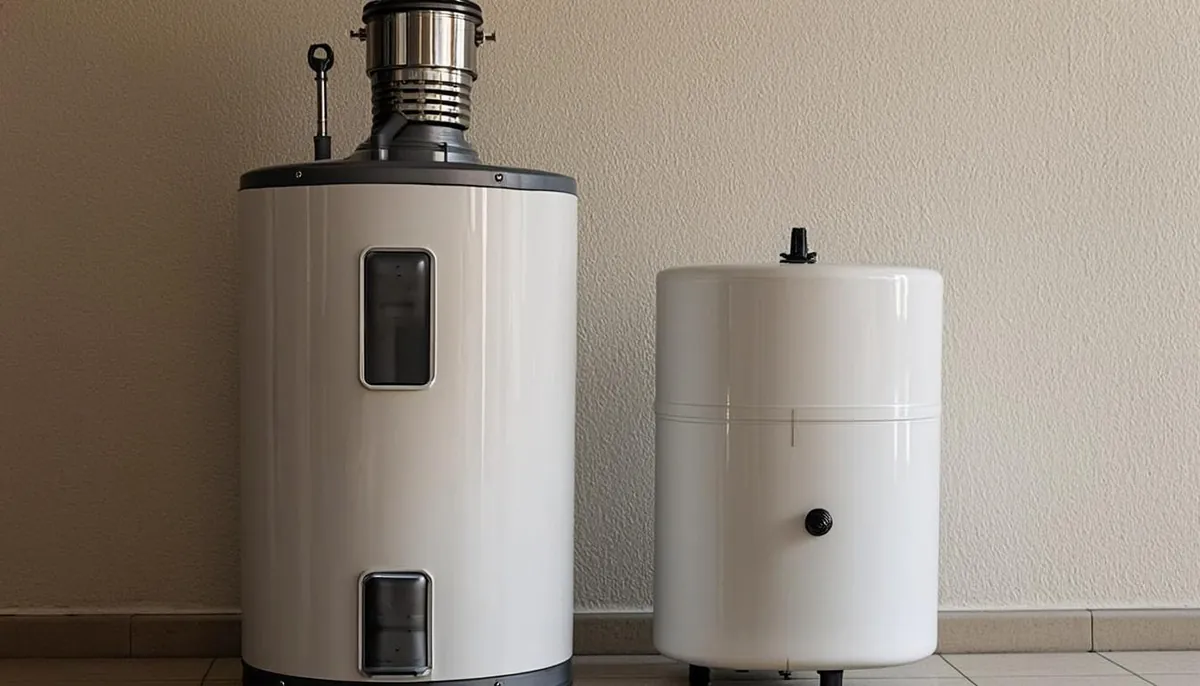
Gas and electric water heaters both do the job, and the honest answer to which fuel type fits better starts with what your house already has. Fuel follows infrastructure: the home with a gas line at the utility space and a healthy flue buys back operating savings every year, while the all-electric home usually pays less to install and lets efficient equipment close the operating gap. This guide compares the two on the factors that actually decide a replacement, the way we walk them with homeowners on estimate visits across Anne Arundel County.
How Gas Water Heaters Work
A gas tank burns fuel in a burner under the vessel, and combustion heat rises through the tank's center flue on its way out, heating water on both sides of the metal. The moving parts are a gas control valve, a pilot or electronic ignition, a thermocouple or flame sensor, and the venting that carries exhaust outdoors. The architecture heats fast and recovers quickly, which is why gas remains the default where the supply exists. It also means combustion byproducts, draft, and venting condition join the maintenance conversation permanently.
How Electric Water Heaters Work
An electric tank heats with two resistance elements dipped in the water, one upper and one lower, each governed by its own thermostat, all fed through a dedicated high-capacity circuit. There is no combustion, no vent, no exhaust: the unit is a pressure vessel with heating hardware and safety cutoffs. That simplicity buys quiet operation, a smaller installation footprint, and component repairs that are among the cheapest in the trade, at the price of slower recovery than a comparable gas burner delivers.
Initial Equipment Cost
The equipment itself is a near tie in the standard tiers: comparable gas and electric tanks sit within shouting distance of each other on the shelf. The installation decides the real number. Electric-to-electric swaps are the lightest work in the trade, which shows in our local installed ranges, while gas replacements carry combustion-side labor and materials. Fuel conversions run their own race entirely: adding a gas line, venting, and combustion air to an all-electric home is an infrastructure project, and so is powering a whole-home electric tankless unit off an older panel.
Operating Cost and Energy Consumption
Where natural gas prices behave, the gas tank wins the monthly bill: fuel energy has historically cost less per unit of heat than resistance electricity in this region, and the tank's standby losses are similar between fuel types. Three developments complicate the old rule. Heat pump (hybrid) electric tanks move heat instead of making it and reach efficiencies no combustion tank matches, flipping the math for all-electric homes with the headroom to host one. Rate structures vary by utility and season. And usage patterns decide how much any of it matters, since a light-usage household's bill difference can round to zero. We run the comparison against current local rates on the estimate visit rather than publishing figures that age in a season.
Recovery speed deserves a line in the operating conversation because it shapes behavior. A gas tank's fast recovery absorbs a household that runs laundry when it pleases; an electric tank's slower recovery quietly trains the household to stagger draws, and households that never adapt feel the difference as lukewarm second showers rather than as a bill. Efficiency per gallon and experience per morning are different scores, and the fuel choice moves both, which is why our estimate walks your actual routine rather than the spec sheet alone.
Gas Supply vs. Electrical Capacity
Every home has electricity, but not every home has gas at the water heater's location, and capacity decides both paths. The gas questions are meter capacity, line size, and run length, the same verification a tankless conversion needs. The electric questions are circuit availability, wire gauge, and panel headroom, which matter most when adding a heat pump tank's dedicated circuit or a whole-home electric tankless's multiple high-capacity circuits. Our site check answers these before any quote, because fuel decisions made from assumptions are how conversions go sideways.
Venting and Installation Requirements
This is the sharpest physical difference. Gas equipment must vent combustion exhaust, which means a serviceable flue or a power-vent route, correct clearances, and combustion air for the room, all verified on every install because a tired vent is a safety issue and not a cosmetic one. Electric equipment vents nothing, needs no combustion air, and installs into closets and spaces a gas unit could never occupy. The county's adopted codes govern both paths, and permitted installation applies to the gas side's appliance and piping work in particular, as our county permit guide explains. Our water heater installation service verifies the venting path and combustion air on every gas quote before equipment is ordered.
Maintenance Differences
Both fuels share the tank-side basics: sediment flushing, anode checks, temperature and pressure verification. Gas adds its combustion layer, burner condition, draft testing, and vent inspection, which our gas service covers on maintenance visits. Electric adds a component layer that is different in kind: elements and thermostats are individually replaceable at modest cost, and a ten-year-old electric tank with a failed element is often worth repairing where a gas tank's valve failure at the same age leans toward replacement. Neither fuel escapes maintenance; they just differ in what the technician checks.
Choosing Based on Existing Home Infrastructure
- Gas at the utility space with a sound flue: stay gas, capture the operating savings, and spend the difference on a better equipment tier.
- All-electric home: stay electric and spend the conversion budget on the best electric equipment instead, particularly a hybrid if the space allows.
- Failed gas equipment with a failing flue: price the flue repair against a hybrid electric before defaulting to gas again.
- Household adding demand (in-law suite, bigger family): recovery rate favors gas, and tankless gas favors it more, sized to winter.
- Finishing a basement or converting a utility closet: electric's no-vent footprint unlocks spaces gas cannot use.
Our gas water heater services and electric water heater services pages cover what each fuel's repairs and installs involve, and our tankless comparison guide extends this analysis to the tankless decision. When the comparison ends in new equipment, our replacement service prices both fuel paths in writing after a site check.
Is a gas or electric water heater cheaper to run?
With typical regional rates, a standard gas tank usually costs less per year to operate than a standard electric resistance tank, and a heat pump electric tank beats both where it fits. The reliable way to answer for your house is against your actual utility rates and usage pattern, which is part of every estimate we write rather than a national average we quote.
Can I switch from an electric to a gas water heater?
Yes, when the infrastructure supports it: a gas line reaching the utility space, meter capacity, venting route, and combustion air. Those additions are real work with real cost, so the switch pays back over years of operating savings, not immediately. We price the conversion honestly on the estimate alongside the best all-electric option.
Which lasts longer, gas or electric water heaters?
In our service records, electric tanks edge out gas by a year or two on average, largely because the shell does not live over a burner flame. Equipment quality, water chemistry, and maintenance matter more than fuel, though, and a well-flushed gas tank routinely outlives a neglected electric one.
Do I need a permit to switch my water heater fuel type?
Yes: adding or relocating a gas appliance and its piping maps to the county's gas permit group, and any new electrical circuit maps to the electrical permit group, with the work performed by tradesmen licensed in Anne Arundel County. Our permit guide walks through which trade permits apply and how the inspection sequence runs.