What Is First Hour Rating and Why Does It Matter?
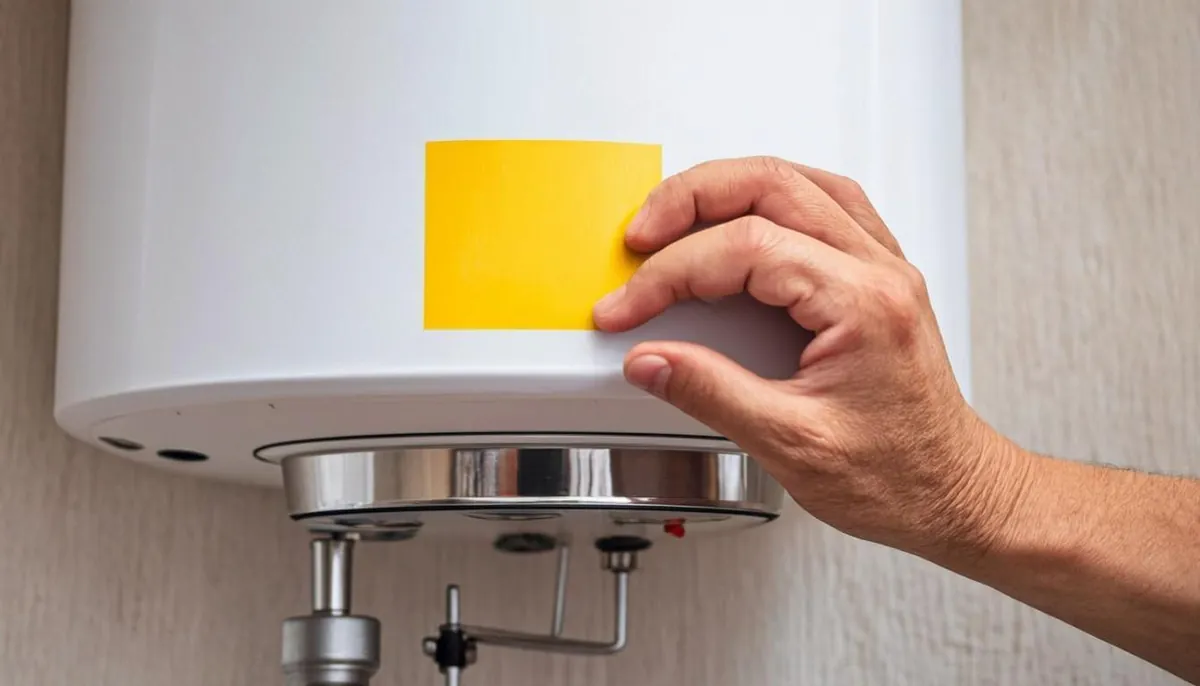
Tank shopping usually starts and ends with one number: gallons. The number that actually decides whether showers stay hot through a stacked Saturday morning is the first hour rating, and it is the first specification our estimators check on any sizing visit around Odenton. Two tanks wearing the same gallon label can deliver meaningfully different amounts of hot water in the hour that matters, and the label explains why. This guide covers what the rating measures, where to find it, and how we use it to size a replacement.
What Is First Hour Rating?
ENERGY STAR defines the first hour rating (FHR) as an estimate of the maximum volume of hot water, in gallons, that a storage water heater can supply within an hour that begins with the heater fully heated. Under the Uniform Energy Factor test method the figure is measured at a 125 degree Fahrenheit outlet temperature, and ENERGY STAR's buying guidance frames it as how much hot water a model can deliver during a busy hour. The number appears on the yellow EnergyGuide label attached to the unit and on every manufacturer spec sheet, which makes it one of the few sizing numbers a homeowner can read for themselves before anyone quotes anything.
How FHR Is Different From Tank Capacity
Tank capacity is storage: how much water the jacket holds. First hour rating is delivery: how much hot water actually reaches the fixtures during the first sustained hour of draw. The two are related but not interchangeable, because a tank never delivers its full nameplate volume at full temperature. Cold water entering at the bottom mixes with the stored hot water as fixtures draw, and manufacturer sizing guidance treats roughly 70 percent of a tank's volume as the usable draw from a fully heated state. The balance of the first hour figure comes from the water the unit reheats while you are still drawing. That arithmetic is how a well built 40-gallon gas tank posts a first hour rating that embarrasses a lazier 50-gallon electric, and it is the entire argument behind comparing ratings instead of labels. Our 40 vs. 50 gallon comparison works through that decision in detail.
What Is Water Heater Recovery Rate?
Recovery rate is the other half of the specification pair: how fast the unit replaces the hot water it just gave away, usually published in gallons per hour at a stated temperature rise. Burner size on gas models and element wattage on electric models decide it, which is why gas tanks recover faster as a class than electric ones of the same size. Recovery is also the number that quietly degrades first: sediment blanketing the tank floor insulates the water from the heat source, and a tank that recovered in forty minutes when new can take twice as long after years without a flush. Add Maryland's cold winter inlet water, which stretches every rise the unit must make, and the case for checking the rating rather than assuming it gets a fuller picture.
How Household Peak Demand Affects FHR
Every household has a power hour: the single busiest hour of its week, usually a morning where showers, shaving, the dishwasher, and a laundry load stack together. That hour's total draw is the number the first hour rating has to beat, not the household's daily consumption. Counting the fixtures realistically running in the same hour, estimating each one's volume, and comparing the sum against a candidate unit's FHR is the whole method, and our water heater sizing guide walks the fixture math step by step. The incumbent tank is evidence too: a tank that never runs out is telling you the household's peak fits inside its rating, and one that goes cold every second shower is telling you the opposite.
How to Compare Water Heater Specifications
- First hour rating, in gallons, on the EnergyGuide label and the spec sheet.
- Uniform Energy Factor (UEF), the efficiency figure, which is a separate number from FHR.
- Recovery rate in gallons per hour at the stated temperature rise.
- Tank capacity and the physical dimensions that decide whether the jacket fits the space.
- Warranty terms on both tank and parts, in years and in writing.
- Comparisons within the same fuel type first, since gas and electric ratings are earned differently.
Reading the labels side by side is where specifications start doing real work. A high first hour rating on an inefficient unit still shows up in the monthly bill, and an efficient unit with a weak rating still produces cold showers; the two numbers answer different questions and both belong in the decision.
FHR and Water Heater Sizing Examples
Example one: a couple in a two-bathroom colonial whose busiest hour is two showers back to back plus a dishwasher load. Illustratively, two showers draw roughly ten to fifteen gallons each and a modern dishwasher adds six to ten, so the hour lands somewhere in the high twenties to low forties of gallons. Most healthy 40-gallon gas tanks post first hour ratings comfortably above that line, which is why the incumbent 40 that has never run out is usually telling the truth.
Example two: a household with three teenagers where laundry runs during the morning shower block. Stacked like that, the hour can push past fifty gallons, and capacity alone stops being the answer: a 50-gallon tank with a modest burner can post a lower first hour rating than a 40-gallon tank with a strong one. The spec sheet, not the gallon label, settles it, and where the hour runs truly heavy the conversation moves to high-recovery gas, a hybrid heat pump model, or a tankless design sized by flow instead.
Both examples are arithmetic, not guarantees: first hour figures vary model to model, and the estimate visit is where we match the published rating against your household's actual busiest hour. The sizing consult is free, and it ends with a written quote rather than a guess.
What is a good first hour rating for a family of four?
There is no fixed number, because the household's pattern matters more than its headcount. A family of four that spreads showers across the day fits easily in equipment a stacked morning household would starve. We total the fixtures realistically running in your busiest hour and match that figure against the rating; the incumbent tank's history, never a chart, is the tiebreaker.
Where do I find the first hour rating on my water heater?
On the yellow EnergyGuide label attached to the unit and on the manufacturer's specification sheet for the model number on the rating plate. If the label is long gone, the model number is enough: manufacturers publish the rating for current and recent models, and our office can pull it during a quote visit.
Why does my water heater run out of hot water faster than its first hour rating suggests?
Published ratings describe a new, clean, fully heated tank. Sediment buildup, a failed element on an electric unit, a broken dip tube, or a drifting thermostat all shrink real-world delivery below the label; the guide on why hot water runs out covers the causes and the fixes in detail.
Does a higher first hour rating mean a more efficient water heater?
No. The first hour rating measures delivery volume; the Uniform Energy Factor measures how efficiently the unit converts fuel into hot water. A high-recovery unit with a poor UEF delivers generously and bills accordingly. The two numbers sit side by side on the EnergyGuide label precisely because a good purchase needs both.