40-Gallon vs. 50-Gallon Water Heater: Which Size Do You Need?
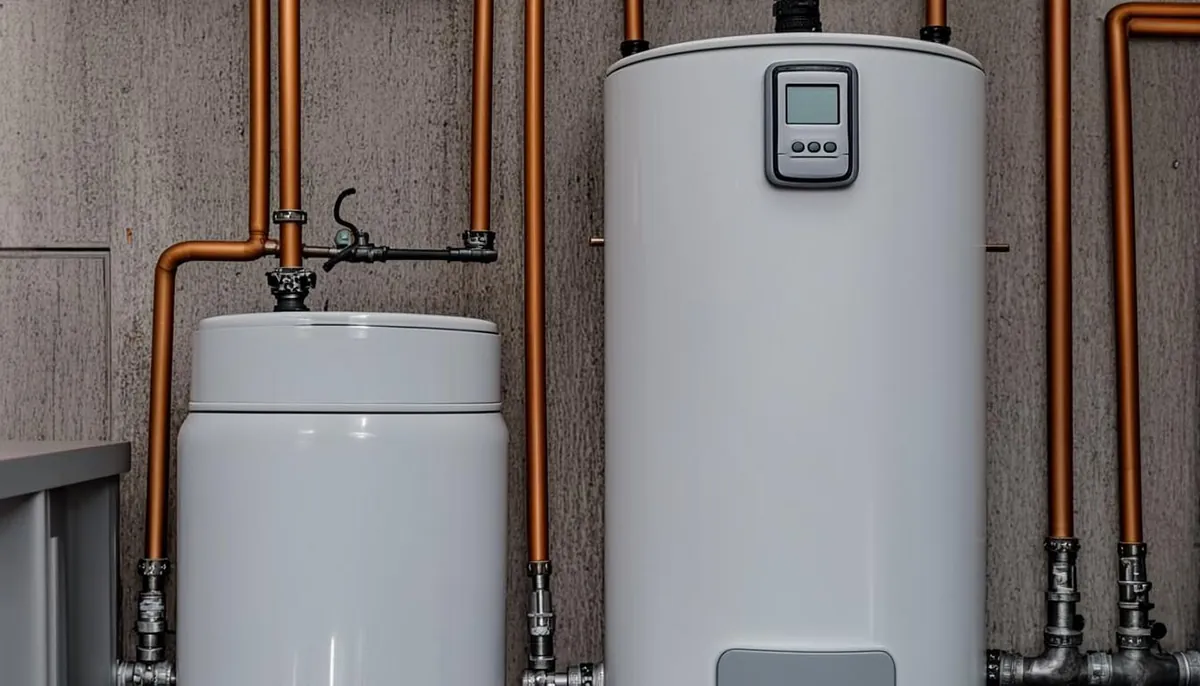
The 40 vs. 50 gallon decision comes up on a large share of the replacements we quote around Odenton, because both sizes fit the same utility closets and both come in gas and electric versions at similar price points. Choosing wrong is expensive in one of two directions: a tank too small turns every morning into a scheduling problem, and a tank bigger than the household uses wastes energy heating water nobody draws. This guide explains how the two sizes actually differ, how to read your own household's demand, and the method we use to match capacity to a home rather than to a rule of thumb.
How Storage Water Heater Capacity Works
The gallon figure describes the tank's storage volume, but the number that governs real performance is how quickly that stored water gets used and replaced. Two mechanisms run together: the burner or elements heat the stored volume, and incoming cold water mixes at the bottom of the tank as hot water is drawn. That mixing is why no household ever receives the full nameplate volume at full temperature. Capacity and recovery work as a pair, and the pair is what should be sized, not the gallon label alone.
40-Gallon Water Heater Applications
A 40-gallon tank is the comfortable fit for one- and two-bedroom homes, couples, and households whose hot water use spreads across the day rather than stacking at 7 a.m. It recovers slightly faster than a 50 on the same fuel because there is less volume to reheat, which partially offsets its smaller reserve. In our service area it is the common incumbent in townhomes and smaller colonials, and it remains the right answer for a large share of the replacement quotes we write.
50-Gallon Water Heater Applications
The 50-gallon tank earns its footprint in three-to-four-bedroom homes, households with teenagers or frequent guests, and any home where two bathrooms run morning routines simultaneously. Its larger reserve absorbs back-to-back showers plus a dishwasher without the last user going cold. The trade-offs are modest but real: slightly higher purchase price, slightly longer recovery between full draws, and a taller jacket that matters in short closets and attic platforms.
Household Size and Peak Hot Water Demand
Headcount is where most sizing advice starts, and it is the weakest signal available. Two households of four can use hot water completely differently: one stacks every shower, laundry load, and dishwasher cycle into a single morning hour, and the other spreads usage from 6 a.m. to 11 p.m. What actually decides the tank is peak-hour demand, the largest volume any single hour of your household's week asks for. We estimate it from the fixtures likely to run together, then check it against the incumbent tank's real behavior: a 40-gallon tank that never runs out is telling you the household's peak fits inside 40.
First Hour Rating and Recovery Rate
Manufacturers publish both numbers, and together they answer the sizing question precisely. First hour rating expresses how much hot water the unit can deliver in a sustained hour of heavy draw starting from a fully heated tank; recovery rate expresses how fast it replaces what was used. Two 50-gallon tanks with different burners or element wattages can post meaningfully different first hour figures, which is why we compare ratings across models rather than assuming the gallon label carries the information. Our water heater sizing guide works through these numbers against real fixture lists, and the first hour rating guide breaks the specification itself down in detail.
Fuel type bends the comparison in a way the gallon label never shows. A gas 40-gallon tank recovers faster than an electric 50-gallon in most homes, because combustion refills the reserve quicker than resistance elements do, so the smaller gas tank can outperform the bigger electric one on a stacked morning. The reverse holds where electricity is cheap and demand is spread out. This is why the sizing conversation starts with fuel and peak pattern, and why swapping capacity without checking both produces exactly the complaints that brought you to this article.
Bathroom and Appliance Usage
Fixtures weigh more than room count. A home with two full bathrooms used in sequence runs fine on less capacity than the same home with the showers overlapping. A dishwasher with an internal heater takes pressure off the tank; an older machine that pulls all-hot water does not. Front-loading washers use far less hot water than top-loaders from a decade ago. When we size a replacement, we walk the home's actual fixtures and appliances rather than applying the gallon-per-person arithmetic, because the arithmetic predates the efficient appliances most homes now run.
How to Select the Correct Capacity
- Start with the incumbent tank's behavior: never runs out, runs out occasionally, or runs out daily.
- List which fixtures realistically run in the same hour on your busiest morning.
- Match that peak against published first hour ratings, not against tank volume alone.
- Hold the fuel type constant unless a conversion is planned; gas and electric recover at different speeds.
- Check the space: height, doorways, and drain pan clearance decide whether the larger jacket fits at all.
- If the household is growing, size for the family you expect in three years, within reason.
Run the list and most homes land clearly on one side. When it does not, the deciding factor is usually the morning pattern, and one extra step up in capacity costs less than a decade of cold-showers negotiation. Our replacement service includes the sizing walk-through on the estimate visit, and our installation page covers what the swap involves once a size is chosen.
Is a 50-gallon water heater big enough for a family of four?
Usually yes, particularly where showers overlap in the morning. The better question is the household's peak hour: a family of four that spreads usage across the day fits comfortably in a 40, while one that stacks three showers, laundry, and a dishwasher before 8 a.m. pushes a 50's first hour rating. We size from the pattern, not the headcount.
Does a bigger water heater cost more to run?
Only through standby losses, which are modest on modern insulated tanks and mostly matter when the larger tank heats water nobody uses. The expensive mistake runs the other direction: an undersized tank pushed past its recovery every day works longer cycles and ages faster. Match capacity to demand and the running cost difference is small.
Can I switch from a 40-gallon to a 50-gallon during replacement?
In most utility rooms and garages, yes; both share standard connections and the swap is common work for us. The checks are physical, not conceptual: jacket height against the closet, platform weight limits in attics, and drain pan size. We confirm all three on the estimate before the quote is written.
Why does my brand-new 50-gallon water heater run out of hot water?
A new tank that underperforms points at the installation or the demand pattern rather than the tank: inlet and outlet reversed, dip tube damage, thermostats set low, a wiring issue leaving one element dead on electric, or a household peak genuinely larger than the rating. We diagnose new-installation complaints the same week they appear, and the fixes are usually quick.
Related guides
Sizing guide · Hot water runs out fast · First hour rating · Replacement cost guide