What Does a Water Heater Expansion Tank Do?
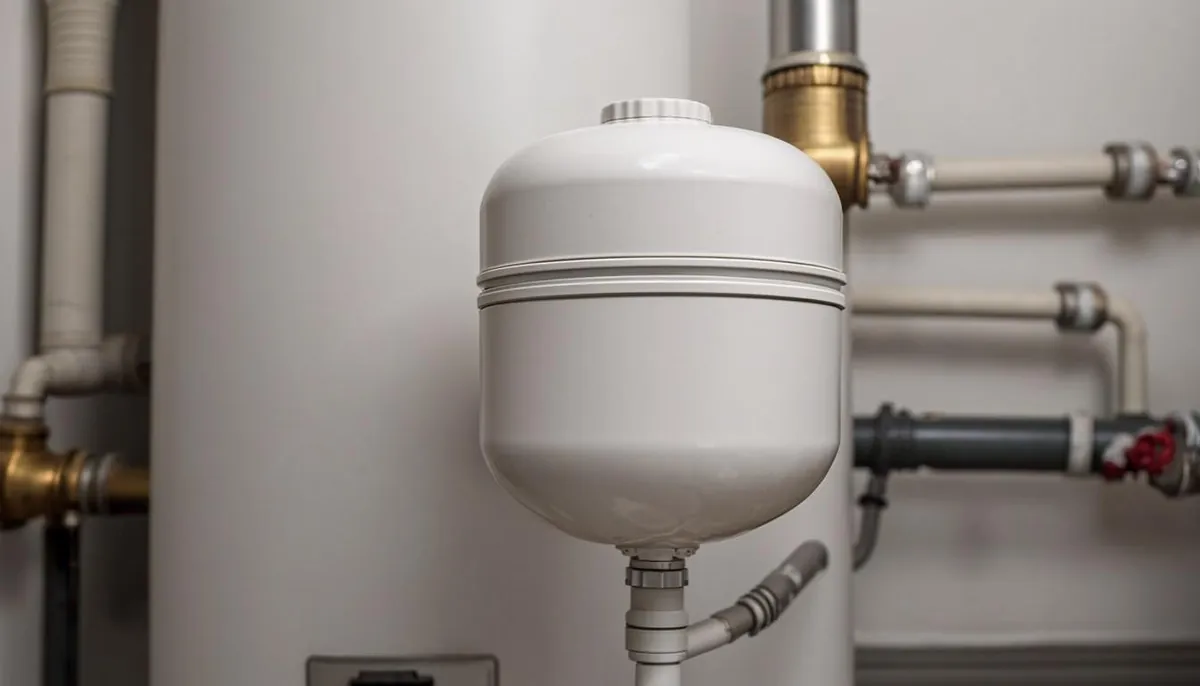
Next to the heater itself, the expansion tank looks like an afterthought: a small cylinder teed onto the cold water line, silent its whole life, noticed by no one until the day its job goes undone and the relief valve starts weeping on the utility room floor. The questions homeowners actually ask about it are the right ones: what is it doing, is it really needed at my house, and how do I tell whether mine still works. The short version is that hot water expands, a closed plumbing system gives that expansion nowhere to go, and the expansion tank is the somewhere. This guide walks through the physics, the closed-system problem that makes the tank necessary in so many Odenton-area homes, how the component works and fails, and how it relates to the safety valve it exists to protect.
What Is Thermal Expansion?
Water behaves predictably when heated: it expands. A standard tank going from cold main temperature to hot storage temperature grows its water volume by a couple of percent, which sounds trivial until the arithmetic runs on forty or fifty gallons and produces several quarts of new volume that did not exist that morning. Water does not compress, so that volume has to be accommodated somewhere, in real time, on every heating cycle. In older plumbing the solution was accidental: the water main itself absorbed it. Water with nowhere to go inside the house simply pushed back toward the street, and the system breathed through its connection to the main. Modern plumbing, deliberately and safely, closed that door.
Why Closed Plumbing Systems May Need Expansion Control
A closed system is any house whose supply cannot push water back to the main, and the devices that create that condition are common and useful: pressure reducing valves that tame high main pressure, backflow preventers that protect the public supply, and check valves that keep water moving one direction. Many homes around Odenton sit behind one of these without anyone noticing. Model plumbing codes respond with a matching requirement: where a device closes the system, thermal expansion control must be provided, most often as an expansion tank on the water heater's cold line. The requirement is not bureaucratic caution. Without expansion control, every heating cycle raises system pressure, and that pressure has to come out somewhere, usually at the weakest spring-loaded seat in the house, which is the water heater's temperature and pressure relief valve.
How a Water Heater Expansion Tank Works
The component is a small pressure vessel divided by a flexible bladder or diaphragm. One side connects to the cold water line and fills with system water; the other side holds a cushion of compressed air, pre-charged at the factory and adjusted at installation to match the supply pressure. When the heater runs and the water volume grows, the extra volume pushes into the tank and compresses the air cushion, which gives the expansion somewhere to go while holding system pressure close to normal. When hot water is drawn and cold water refills, the cushion pushes back and the borrowed volume returns to the system. The tank does this thousands of times a year without moving parts, which is both its elegance and the reason its failures are quiet: a bladder that wears out makes no sound, only symptoms downstream.
Signs of Expansion Tank Problems
- The T&P relief valve weeping or discharging during heating cycles with no other fault found.
- Hot water faucets sputtering or spitting air, which a waterlogged tank can cause.
- Banging and pressure spikes in the lines when valves close, as the system loses its cushion.
- An expansion tank that feels heavy and sounds solid when tapped, rather than hollow near the top.
- Water or a drip at the tank's air valve, the signature of a ruptured bladder.
- A gauge on the system showing pressure climbing steadily every time the heater fires.
Any of these earns a look at the tank, and the tap test is the thirty-second version: a healthy tank sounds hollow near the top where the air cushion lives, while a waterlogged one thuds like it is full, because it is. None of the signs is dangerous the way a gas symptom is dangerous, but all of them are expensive if ignored, because they route the system's pressure problems through hardware that was never designed to absorb them.
Expansion Tank Sizing and Installation
Two numbers size the tank: the volume of the water heater it serves and the pressure of the supply it lives on, and both matter more than the packaging suggests. An undersized tank absorbs less expansion than the heater produces, and a pre-charge that does not match the measured supply pressure surrenders much of its working volume before the first cycle; we set the air side with a gauge at installation rather than trusting the factory default. Placement carries its own requirements: the tank goes on the cold line between the shutoff and the heater, it needs real support, a water-filled expansion tank is heavy and hanging one from a solder joint alone is a future leak quotation, and it stays accessible so the annual check can reach it. Installed alongside a new heater, it rides the same permit and inspection scope as the rest of the job, which our Anne Arundel County permit guide covers in detail.
How Expansion Tanks Relate to T&P Valve Discharge
The temperature and pressure relief valve is the tank's last mechanical backstop, and the expansion tank is the component that keeps everyday pressure away from that backstop so it stays reserved for emergencies. On a closed system without working expansion control, every recovery cycle pushes pressure up toward the valve's threshold, and the valve spends its life doing a job it was never meant for, opening on warm afternoons, weeping through recoveries, and wearing its seat with each event. A valve used as an expansion device becomes a leaking valve, and a leaking safety valve becomes a service call. That division of labor, expansion tank for the routine, relief valve for the emergency, is the whole relationship, and our guide to the T&P relief valve covers the safety side in its own right.
Is an expansion tank required by code in Maryland?
Where a pressure reducing valve, backflow preventer, or check valve closes the system, model plumbing codes require thermal expansion control, and the jurisdictions around Odenton adopt those codes with local amendments. On our installations we verify what the house actually has on its supply line and size the expansion control to match, because the requirement follows the plumbing, not the map.
How long does an expansion tank last?
Bladder fatigue sets the limit, and the honest range runs well short of the water heater itself, which is why the tank gets checked at every annual maintenance visit rather than trusted for the heater's full life. A tank that survives a decade has done well; one that waterlogs at five has still earned its keep many times over.
Can I install an expansion tank myself?
Experienced DIYers do, with the system depressurized and the pre-charge matched to a measured supply pressure. The failures we are called to correct are rarely the soldering: they are tanks hung without support, pre-charges left at factory default against a much higher main, and bladders already compromised by a rough installation. The part is inexpensive; the installation details are the product.
What happens if a closed system has no expansion tank?
The T&P relief valve becomes the expansion device by default: it weeps during recoveries, wears its seat, and eventually drips continuously, while fittings, fixtures, and the heater itself live with pressure spikes on every heating cycle. The system works, in the sense that water stays hot, and it ages faster everywhere at once.